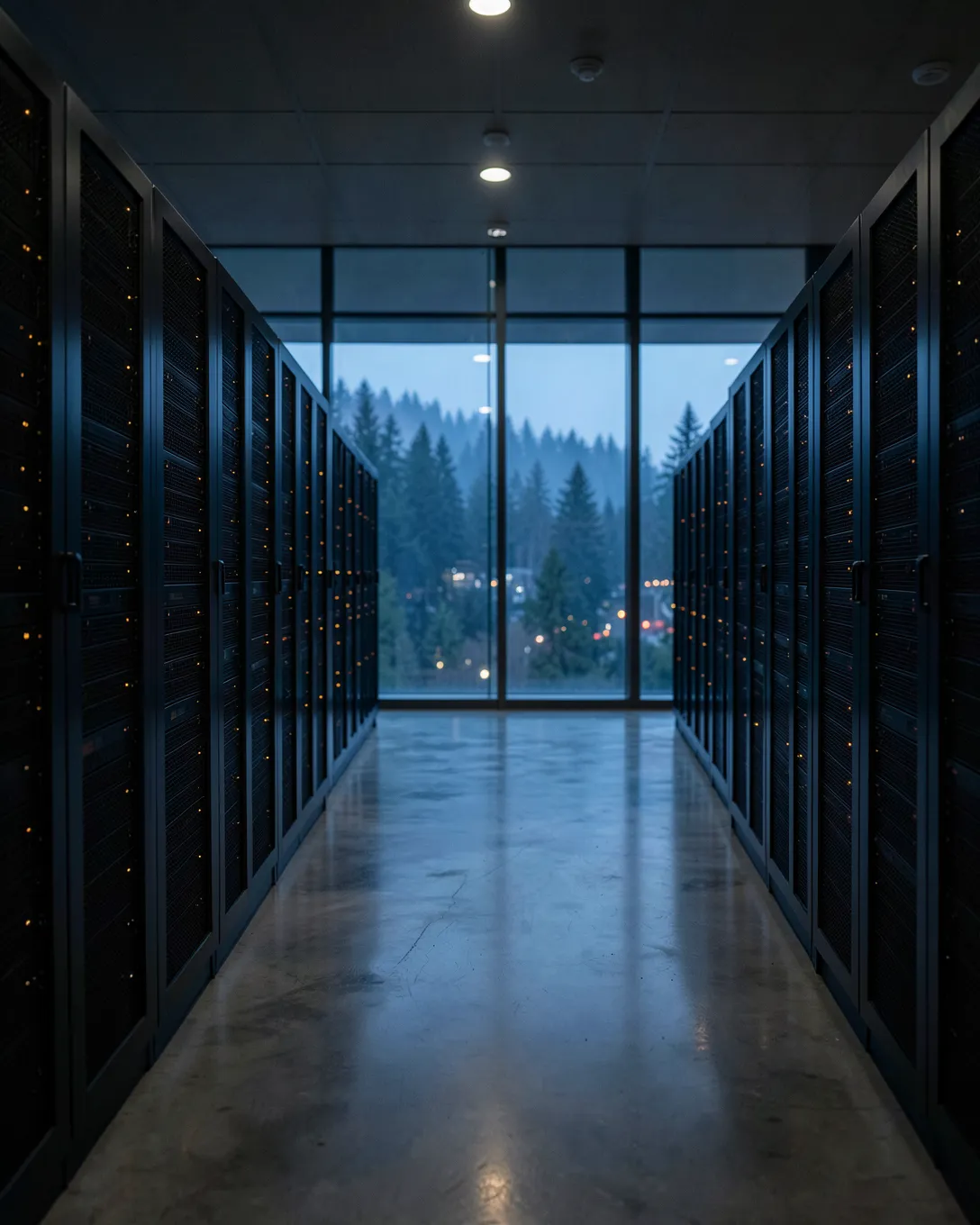
A private data hall at blue hour, server racks leading to a glass wall over an evergreen forest
Happy Holidays

Sovereign AI for the enterprise

Own the model. Own the outcome.

Sovereign AI is the ability to build, adapt, and operate AI under your own control—without outsourcing your data, decisions, or destiny.

Built on proven open source

51 open-source projects we deploy, integrate and support. Select the strip to see them all.

18capability domains
6architecture planes
90 daysto a governed production service
The keynote's opening title: Own the model. Own the outcome.

Keynote · about 3 minutes

Why enterprise AI is slipping out of control, how sovereign AI puts it back in your hands, and how to start.

Request a briefing
Hands laying out a workflow of paper cards joined by pencil arrows, with one branch held by a small gate.

Market comparison

AI pipeline tools compared

Ten tools, from n8n to Databricks, on price, metering, hosting and capability, and the gap the Webspinner AI Pipeline Designer fills.

  • 10tools
  • 12capabilities
  • 60sources

Own the model. Own the outcome.

0:00 / 0:00
An open steel security cage in a server room, a badge reader glowing beside the door

What sovereignty means

Sovereignty is not merely running a model inside your perimeter. It means retaining operational control of the data, weights, infrastructure, identities, supply chain, and ability to change course.

A facilities engineer marks a clean boundary around a server rack while a security guard watches.
  • Data

    Prompts, embeddings, logs and backups stay where you put them.

  • Weights

    Models and adapters are yours, portable and provenanced.

  • Infrastructure

    Compute and storage run inside your perimeter.

Your AI

models, data, decisions

  • Identities

    Least privilege for people, services, models and tools.

  • Supply chain

    Every dependency reviewed, licensed and replaceable.

  • Exit

    Open interfaces and rehearsed exits keep switching real.

Sovereignty is a boundary you can draw, defend and rehearse.

01 — Services

Full-stack capability.

From board-level strategy to operating model, Webspinner fields the senior engineers and architects required to make sovereign AI practical—not aspirational.


A team of engineers working through printed architecture diagrams at a long table
A strategist builds a radial hub pattern with threads on a corkboard in a Portland advisory studio.
Every engagement draws on these lines; the catalog below opens each capability in detail.

The full capability catalog

Select a domain to inspect what we deliver, what we prevent, and the evidence you should hold us to.

02 — Approach

Four principles for retained control.

Sovereignty fails quietly when trust is implicit, exits are untested, state is unclear, and evidence is missing.

Labelled fibre patch cables in navy and amber plugged into a network switch
01

Minimize trust

Explicit identity and least privilege for people, services, models, and tools.

02

Design for exit

Portable artifacts and open interfaces prevent a new dependency trap.

03

Make state explicit

Know where prompts, embeddings, caches, logs, and backups live.

04

Prove, don't assume

Test quality, isolation, recovery, and performance under real workloads.

03 — Architecture

A system of control, not a single model.

A sovereign AI system is composed of six planes. Each has a distinct engineering discipline, and the trust plane binds them to identity, policy, provenance, and audit.

A scale model of six stacked glass planes joined by one brass rod

04 — Practice & FinOps

AI sprawl is the budget problem of this decade.

Cloud sprawl was tamed by discipline. AI needs the same: clear practice areas, proven methods and measured disciplines that raise quality, lower cost and realize revenue together.

A financial controller measures a dense tangle of unused power cords in a sprawling server room.

01 · The pattern

AI sprawl is the new cloud sprawl

Cloud sprawl · then

  • Untagged accounts and orphaned resources
  • Idle instances running all night
  • Bills nobody could attribute
  • Every team buying its own tools
The answer: FinOps
same pattern

AI sprawl · now

  • Shadow AI subscriptions on expense cards
  • Token spend with no owner or workload
  • Duplicate pilots solving the same problem
  • Rented GPUs idle between experiments
  • Models in production with no evaluation
The answer: AI FinOps + sovereignty
29%
of cloud spend is wasted, rising for the first time in five years as AI workloads grow.
98%
of FinOps practitioners now manage AI spend, up from 31% in 2024.
30%
of generative AI projects predicted to be abandoned after proof of concept: poor data, weak risk controls, escalating costs, unclear value.
Sprawl is not a technology problem; it is a missing discipline.
Three professionals align a triangular brass bracket over a server module on a granite workbench.

02 · The trifecta

The quality triangle, without the trade-off

Procedure around inference

Higher quality

  • Evaluation gates before every release
  • Durable memory that resists drift
  • Deterministic rules for decisions that must not vary

Lower cost

  • No rented frontier AI or metered cloud
  • Machine time is never billed
  • Cost per successful task, measured

Revenue realized

  • Fixed fees tied to agreed outcomes
  • Faster path from pilot to production
  • Quarterly value reviews against a baseline
Quality, cost and revenue improve together when the model sits inside proven procedure.
A practice lead points to three unmarked tool panels in a tidy workshop while a client selects a torque wrench. 03 · How we work

Practice areas, methods and disciplines

Practice area

What we take responsibility for.

Method

How we do the work.

Discipline

The measure we hold ourselves to.

Open source we integrate

Proven, commercially licensed tools we integrate rather than build.

  1. 01
    Practice area

    AI FinOps & unit economics

    Method

    FinOps lifecycle: Inform → Optimize → Operate, with FOCUS-formatted cost data

    Discipline

    Cost per successful task; showback and chargeback by workload

    Open source we integrate
    • OpenCost
    • Prometheus
    • NVIDIA DCGM Exporter
  2. 02
    Practice area

    Sovereign platform engineering

    Method

    Golden paths and infrastructure as code

    Discipline

    Reproducible, signed builds; no unreplaceable dependency

    Open source we integrate
    • OpenTofu
    • Ansible
    • Gitea
    • vLLM
  3. 03
    Practice area

    Durable workflow orchestration

    Method

    Long-running workflows with retries, timeouts, heartbeats and compensation

    Discipline

    Every step idempotent; every run leaves receipts

    Open source we integrate
    • Temporal
    • PostgreSQL
  4. 04
    Practice area

    Decision governance

    Method

    Rules as code: the model proposes, the rules engine decides

    Discipline

    Versioned rule sets with test suites; published rules are immutable

    Open source we integrate
    • Drools (Apache KIE)
  5. 05
    Practice area

    Knowledge & memory engineering

    Method

    Curated durable memory and permission-aware retrieval with provenance

    Discipline

    Drift detection and scheduled memory review

    Open source we integrate
    • PostgreSQL
    • pgvector
    • local embedding models
  6. 06
    Practice area

    Evaluation & reliability engineering

    Method

    Evaluation-driven development; service objectives with error budgets

    Discipline

    Regression gates before release; blameless postmortems

    Open source we integrate
    • Prometheus
    • Grafana
    • OpenTelemetry
  7. 07
    Practice area

    Value realization

    Method

    Outcome-based contracts with an agreed baseline

    Discipline

    Quarterly value reviews; return on investment tracked
    Open source we integrate
    • Shared value ledger (PostgreSQL)
We integrate proven open source and add the thin layer that makes it yours.
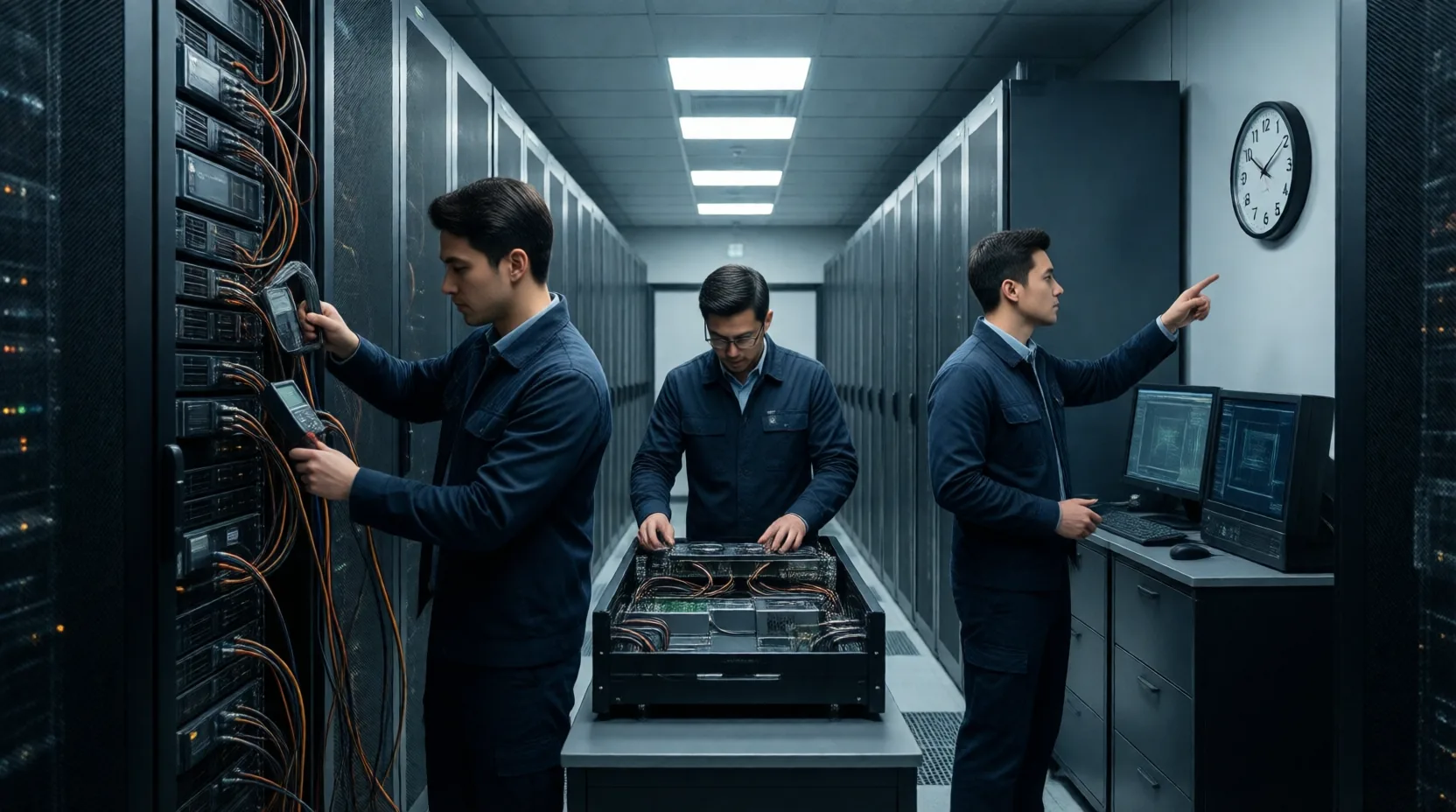
Three engineers work along a server rack measuring power, installing a GPU, and checking an analog clock. 04 · AI FinOps

FinOps for sovereign AI

The loop

Inform

Attribute every GPU-hour, kilowatt-hour and engineer-hour to a workload.

  • FOCUS
  • OpenCost

Optimize

Right-size the model, quantize, batch, cache and schedule work for off-peak hours.

  • vLLM
  • quantization

Operate

Budgets, unit-cost objectives and capacity forecasts against hardware lead times.

  • Prometheus
  • Grafana
↻ Operate feeds the next Inform cycle
The unit
ComputeEnergyPeopleFacilities Successful tasks Cost per successful task
Pitfalls we prevent
  • Treating GPU utilization as the only efficiency metric
  • Leaving engineering and facilities out of cloud comparisons
  • Buying capacity for workloads that do not exist yet
Measure the cost of an outcome, not the price of a chip.

05 — Reliability

Five nines is engineered, not hoped for.

Generative models are probabilistic. We wrap them in deterministic procedure: durable workflows, rules engines and durable memory, so the system stays reliable and does not drift.

A compliance officer presses a brass seal on a blank cover sheet beside a closed rules binder and server module.
01 · The principle

The model proposes. Rules decide. Workflow guarantees.

Procedure around inference
  1. Human in the loop

    Approval gates where judgment and accountability belong.

    Deterministic
  2. Durable workflow

    Every step persisted, retried, timed out or compensated; work survives restarts.

    Temporal
    Deterministic
  3. Rules engine

    Business decisions as versioned, tested rules that return the same answer every time.

    Drools
    Deterministic
  4. Validation

    Schemas, policy checks and evaluation tests on every model output.

    Deterministic
  1. Generative model

    Drafts, classifies, extracts and reasons inside the boundary above.

    open-weight modelsvLLM
    Probabilistic
Reliability is a property of the system around the model, not of the model.
A small steel box passes through six deliberate inspection steps along a long wooden workbench.
02 · Long-running work

A durable workflow, step by step.

  1. 1

    Ingest

    Pull approved sources with lineage.

    PostgreSQL
  2. 2

    Validate data

    Schema, quality and permission checks.

    Great Expectations
  3. 3

    Fine-tune

    Hours of training; checkpoints every step.

    PyTorch
  4. 4

    Evaluate

    Regression suite against the baseline.

    eval harness
  1. 5

    Rules gate

    Release policy decided by rules, not by a prompt.

    Drools
  2. 6

    Expert review

    A person reviews results and risks.

    Human review
  3. 7

    Release

    Signed, versioned, reversible deployment.

    vLLM
  4. 8

    Monitor

    Quality, drift and unit cost in production.

    Prometheus

What the workflow engine does for you

  • Heartbeats — a stalled step is detected and restarted
  • Retries & timeouts — transient failures heal themselves
  • Resume from checkpoint — a restart never repeats finished work

Orchestrated by Temporal (MIT licence)

Machines carry the long hours; people spend their time only where judgment matters.
An archivist closes the lowest drawer of a map cabinet while an engineer holds a blank sleeve beside a server rack.
03 · Memory

Durable memory against AI drift

A — Drift trend
Adherence to agreed decisions
Time
  • Prompts and instructions only
  • Durable memory + rules + gates
  • Illustrative
B — Four layers of memory
  1. Working context

    What the model sees right now. Short-lived.

  2. Session notes

    Decisions and findings within one engagement session.

  3. Durable memory

    Decisions in the client’s own words, lessons learned and measured state, with dates and sources.

    PostgreSQLpgvector
  4. Rules

    What must always hold, enforced by the rules engine, never by recall.

    Drools
What must not drift is written down, retrieved with provenance, and enforced by rules.
A technician adjusts a brass escapement in a lab while an engineer rehearses a server failover.
04 · Five nines

What 99.999% means

A — Downtime per year
Log-like visual scale · durations rounded
  • 99.9%three nines
    8.8 hours a year
  • 99.99%four nines
    52.6 minutes a year
  • 99.999%five nines
    5.3 minutes a year
B — How the nines are earned
  • Idempotent stepssafe to repeat
  • Automatic retries and timeouts
  • Deterministic rules for decisions
  • Redundant serving with health checks
  • Graceful fallback when a model is unsure
  • Error budgets that pause risky change
Five nines comes from procedure: the same way enterprises have always earned it.

06 — Engagement

Earn sovereignty in stages.

The work proceeds from control, to a thinnest useful stack, to a governed production service, and only then to deliberate scaling.

An empty boardroom at dawn, bound reports on a walnut table, a city and mountains beyond
Days 0–30

Establish control

Define the sovereignty boundary and make the first workload measurable.

  • Classify data and threat model
  • Select one high-value use case
  • Baseline quality, latency, and cost
  • Inventory hardware and constraints
  • Verify model and dependency licenses
Days 31–60

Prove the thinnest stack

Deploy a secure baseline before reaching for custom training.

  • Serve a suitable open model
  • Add permission-aware RAG if needed
  • Create a representative eval set
  • Instrument traces and feedback
  • Test quantized inference options
Days 61–90

Harden for production

Turn a working demo into a recoverable, governable service.

  • Automate build and release pipelines
  • Enforce tenant and tool isolation
  • Load test and set service objectives
  • Practice rollback and disaster recovery
  • Red-team high-impact failure modes
Day 90+

Scale deliberately

Adapt models only where the evaluation data justifies the complexity.

  • Fine-tune against measured gaps
  • Standardize reusable platform services
  • Expand capacity with clear unit economics
  • Monitor drift and upstream changes
  • Run continuity and exit rehearsals
Do not start by training a foundation model. First establish whether prompting, retrieval, or a small fine-tune meets the requirement. Pre-training is warranted only by a defensible need, unique data at sufficient scale, and the budget to evaluate and maintain the result.

Sovereignty Assessment

2–3 weeks. Define the boundary, threat model, workload selection, TCO and exit plan, and deliver a readiness score.

Request a briefing

90-Day Pilot to Production

The staged roadmap applied to one high-value workload, delivered as a governed, recoverable service.

Request a briefing

Managed Sovereign Platform

Ongoing operations, evaluation, continuity rehearsals, and upgrades for teams that want retained control with senior support.

Request a briefing

07 — Engagement value

Senior local talent. Offshore rates. Guaranteed outcomes.

Webspinner engagements are built on local experts, automated pipelines, focused-time billing, sovereign infrastructure, and fixed fees that lead to a compounding relationship.

A consultant arranges six small objects around a blank circular outline on a drafting paper.

01 · The idea

Engagement value, mapped

  • Local experts People in your region, your time zone, your regulations.
  • Offshore rates Automation makes senior local delivery affordable.
  • Focused time only The meter runs only when a human is in the loop.
Engagement value
  • Automation pipelines Repeatable processes run by machines, checked by tests.
  • Sovereign stack No rented frontier AI, no costly cloud overhead.
  • Guaranteed outcomes Fixed fees, agreed tests, and a relationship that keeps improving.
Six structural choices turn a custom AI engagement into local accountability at offshore-style economics.
A consultant turns over a sand timer in a meeting room while unattended servers run behind glass.

02 · The meter

You pay for focused attention, not for machines working

  1. Discovery workshop
  2. Data pipeline runs
  3. Design review
  4. Fine-tuning run (overnight)
  5. Evaluation review
  6. Evaluation suite
  7. Quantization & benchmarks
  8. Regression gates
  9. Decision & sign-off
Human in the loop — billed Automation running — not billed
Elapsed time
Illustrative
Billed time
Illustrative
Webspinner absorbs the machine time; the only billable time is focused expert attention with a human in the loop.
A senior engineer coaches junior analysts while automated laptops run tests unattended in a Portland office.

03 · The equation

Local talent × automation = offshore rates

Senior engineers local to you Same time zone, on site when it matters, accountable under your law.
Proven automation pipelines Repeatable steps run by machines, checked by tests.
Offshore-rate pricing Local expertise without onshore overhead.
Automation compresses the cost of senior local delivery; it does not replace the senior people.
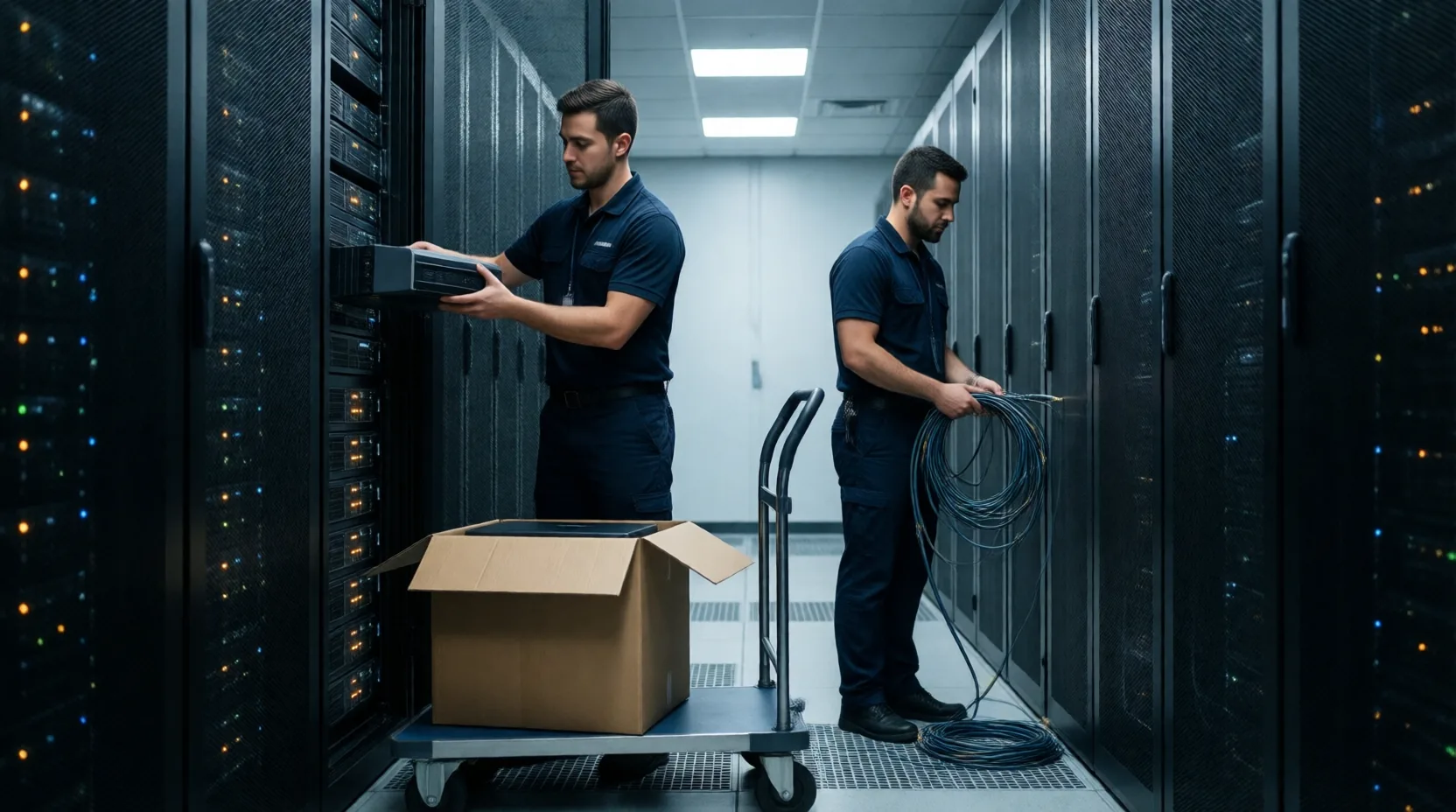
A technician removes a cloud storage appliance from a rack and places it into a cardboard box.

04 · Cost structure

Sovereignty removes whole cost categories

Illustrative cost structure

Typical rented-AI program

  • Frontier API tokens
  • Cloud GPU rental
  • Data egress & storage
  • Coordination overhead
  • Expert time

Webspinner sovereign engagement

  • Expert time (in the loop)
  • Your own hardware
  • No rented frontier AI
  • No metered cloud
  • No egress fees
Sovereignty removes whole cost categories; it does not just discount them.
A consultant climbs a three-step library ladder in a boardroom to place an unmarked ledger on the highest shelf.

05 · The guarantee

The guarantee ladder

  1. 1 Where most firms stop Satisfaction guarantee Useful, but only the floor of a real client relationship.
  2. 2 Fixed fee, guaranteed outcomes Agreed outcomes, measured by agreed tests, at a fixed price.
  3. 3 An ongoing relationship Quarterly value reviews, return on investment tracked, the platform keeps improving.
Webspinner starts at a fixed fee and keeps climbing into a relationship that compounds value.

We take accountability for outcomes, not hours.

Request a briefing

08 — Assessment

Can you operate what you own?

Check only what your team can demonstrate in practice. Your selections stay in this browser.

An operator in a darkened operations room facing calm dashboards
Portrait of John David Marx, founder of Webspinner

09 — About us

Built in Portland, Oregon.

Webspinner is a Portland, Oregon company building local-first, sovereign AI that organizations own and run themselves. It grew from the work of the Webspinner Foundation, which holds that the surest way to see AI used well is for people to own it outright rather than rent it.

Founder

John David Marx

John David Marx is a self-taught programmer who began at sixteen and has spent more than forty-five years in technology. He designed CGL, a fourth-generation language that generated complete C applications for Unix, and founded Open Systems Group on it in 1989; the company reached the Inc. 500 in 1996 and later spun off Para-Docs Software, a document and content management platform.

From 2012 to 2017 he was at Red Hat, rising to Business Development Director for financial services, where he helped global banks adopt OpenShift and put DevOps into production at enterprise scale. In recent years he has led enterprise AI-SDLC transformation and mainframe modernization. He studied Technology and Philosophy at TCU, founded Webspinner in 2024, and lives near Portland, Oregon. He builds this so that people and organizations can own their AI rather than rent it.

Sovereign AI

Control is a capability you rehearse.

The sovereign AI expert does not memorize one framework. They understand the whole system, measure its behavior, and keep the organization able to recover, adapt, and choose.

Request a briefing
Book a briefing

Meet an enterprise solution architect

About This Image

Webspinner has developed technologies that simplify the use of open-weight models for advanced AI capabilities.

This hero image is a living still: one photograph whose rack status lights blink, chatter and glow in colour, reflecting in the floor and the glass. A local open-weight vision model finds where the lights are; deterministic, gated pipelines then measure the room, animate the lights and check every frame. The whole effect is a script of about 6 KB compressed, far smaller than a video, and it runs on hardware a person could buy at a store.

It is an example of what can be done with Webspinner's Inference Conjure suite of pipelines.

Visit Inference Conjure